



BPC-157 is a synthetic peptide discussed in preclinical research and online peptide communities. Searches often combine bpc 157 benefits, bpc 157 side effects, bpc 157 dosage, bpc 157 peptide, bpc 157 Canada, and questions about capsules or other product formats. Those searches do not all ask the same question.
This guide separates the research evidence, safety uncertainty, Canadian regulatory context and catalog information. It is intended for laboratory and research context only. It does not provide human or veterinary use, dosage, injection, reconstitution, treatment or expected-outcome guidance.
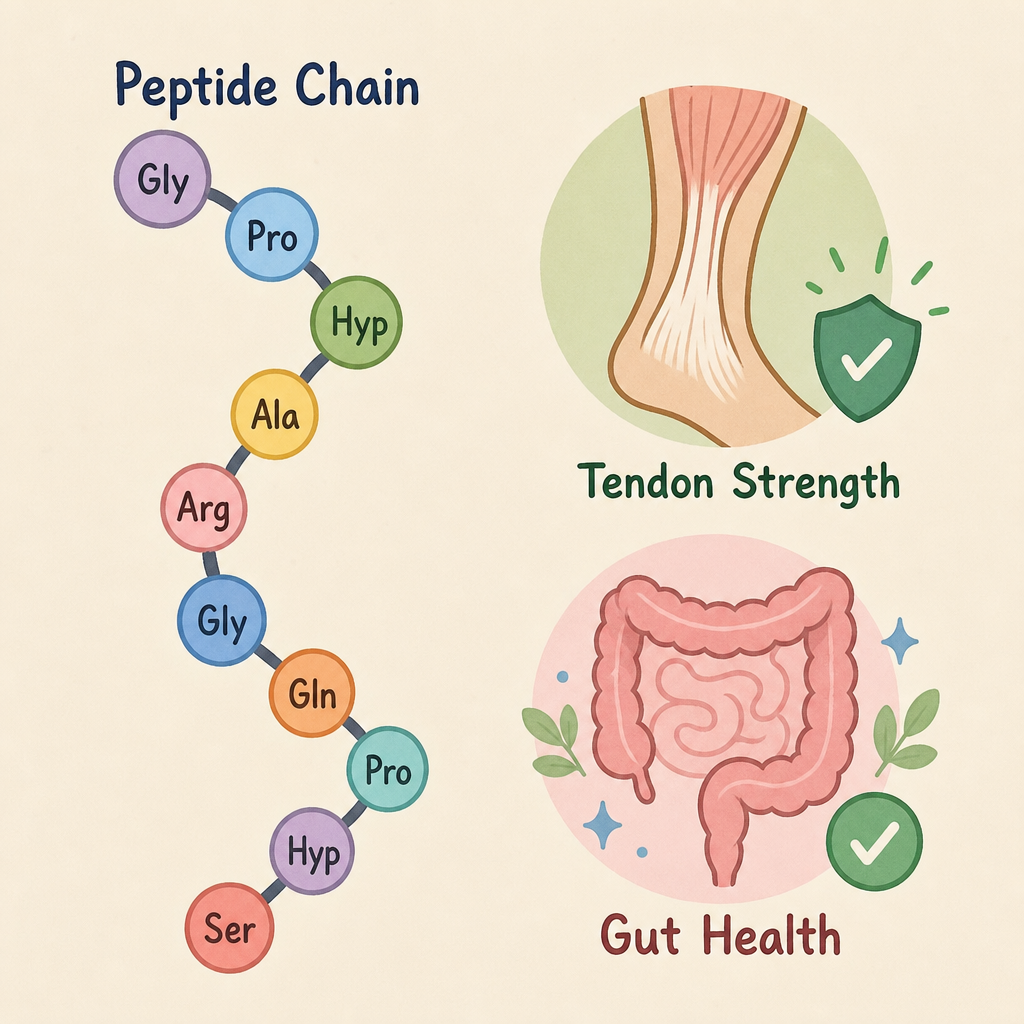
Illustrative educational graphic only. The topics shown are areas discussed in preclinical research and are not validated clinical outcomes or treatment claims.
Quick answer: what is BPC-157?
BPC-157 is the name of a synthetic 15-amino-acid peptide fragment that has been investigated in cell, animal and limited exploratory human research. The literature has discussed tissue-repair, vascular, gastrointestinal and inflammatory pathways, but the available evidence does not establish an approved, standardized therapy.
The most important distinction is between interesting research and proven human benefit:
- Preclinical studies can identify mechanisms and research questions, but they do not establish that a product is safe or effective for a person.
- Small or uncontrolled human observations can generate hypotheses, but they cannot replace a well-designed clinical trial.
- A catalog listing identifies a material and its current ordering fields; it does not prove that the material is identical to the intervention in a paper.
- “Research use only” labeling does not turn an unapproved product into an approved medicine.
What does the BPC-157 peptide research actually show?
The BPC-157 literature is broad, but it is not equally strong across all topics. A useful review begins with the methods section: how the material was identified, what model was used, what comparator was included and which endpoint was measured.
Tissue repair and sports-recovery claims
Many online discussions focus on tendons, ligaments, muscle, joints and sports recovery. Preclinical work has examined areas such as angiogenesis, collagen organization, inflammation and tissue-protection signals. These findings help researchers decide what to study next.
They do not show that BPC-157 reliably repairs an injury in humans. An injury can also change because of time, rehabilitation, rest, sleep, nutrition, reduced training load or other care. Without an adequately controlled trial, a personal story cannot identify which factor caused an improvement.
A recent review of BPC-157 in orthopaedic and sports-medicine research illustrates this limitation: the human evidence remains small and uncontrolled. That makes the topic worth studying, but it does not establish a treatment recommendation.
Gastrointestinal and gut-health discussions
BPC-157 is also discussed in relation to gastric and gastrointestinal research. The biological rationale is partly connected to the peptide’s name and to preclinical work involving gastrointestinal injury and protective pathways.
Symptoms such as abdominal pain, reflux, altered bowel habits and inflammation can have many different causes. A research summary cannot diagnose those conditions or establish that a product is appropriate for them. Persistent or concerning symptoms should be evaluated through appropriate clinical care.
Pain and inflammation claims
Searches for BPC-157 often include pain relief and inflammation. Some experimental studies have explored anti-inflammatory, vascular and tissue-protective mechanisms, but limited human observations are not enough to support confident claims about chronic pain or recovery.
This is a common point where online content overreaches. A plausible pathway is not the same as a demonstrated clinical outcome, and a small report is not the same as a controlled trial.
BPC-157 benefits: how to interpret the keyword safely
The phrase “BPC-157 benefits” is widely used online, but it can refer to several different evidence levels. A more accurate reading is:
- Research signals: cell and animal studies may suggest pathways involving repair, vascular response, inflammation or gastrointestinal protection.
- Human uncertainty: reliable effects, safety, interactions and long-term outcomes remain insufficiently characterized.
- Unsupported certainty: claims such as guaranteed regeneration, universal injury healing or a proven anti-aging effect go beyond the available evidence.
This distinction is useful for searchers because it keeps a topic page from turning a list of laboratory observations into a promise about a person’s result.
What are the possible BPC-157 side effects?
The honest answer is that BPC-157 side effects are not well characterized in humans. Limited safety information does not mean that a substance is risk-free. It means that researchers do not have enough reliable information to define the frequency of short-term reactions, long-term effects, interactions, immune reactions or differences among formulations.
The U.S. Food and Drug Administration has discussed potential concerns related to immunogenicity, peptide impurities, active-ingredient characterization and limited safety information for compounded BPC-157 preparations. Health Canada has also warned consumers about unauthorized injectable peptide products, noting that they may not have been assessed for safety, efficacy or quality and may contain contaminants or an incorrect amount of active ingredient.
The practical research takeaway is that a label, a forum post or a product photograph cannot establish sterility, identity, stability, purity or clinical suitability. “Research use only” is a boundary on intended use, not a safety certification.
Why BPC-157 dosage searches are difficult to answer responsibly
Searches for bpc 157 dosage often expect a number or a protocol. There is no medically approved BPC-157 dosage supported by a validated indication, standardized formulation and established clinical schedule. A number repeated across websites is not automatically evidence.
A meaningful clinical protocol would need to specify the condition, formulation, material quality, route, population, duration, monitoring and stopping criteria. Those questions cannot be resolved by copying a chart from a forum or by comparing a product strength with a study headline.
For that reason, this article intentionally does not publish a dose, cycle, injection instruction, reconstitution instruction or treatment protocol. It explains why those instructions cannot be inferred from online discussions or from a catalog field.
BPC-157 in Canada: regulatory and purchasing context
Canadian searches may use terms such as bpc 157 canada, bpc 157 capsules canada or bpc 157 peptide Canada. A location keyword describes search intent; it does not prove that a product is authorized for sale, approved for a medical purpose or suitable for human use.
Health Canada’s consumer guidance on unauthorized peptide products is an important reference for this topic. The agency warns that unauthorized products have not been assessed for safety, efficacy or quality and advises consumers not to buy or use products labeled for research use only or not for human consumption.
In the United States, the FDA has separately described safety and characterization concerns for proposed compounded BPC-157 preparations. Athletes should also know that BPC-157 appears on the World Anti-Doping Agency’s prohibited list under non-approved substances. The governing rules for a specific sport or event should be checked directly with the relevant organization.
These regulatory sources are not product endorsements. They are part of the evidence and risk context that should be reviewed before treating online claims as reliable.
How to read BPC-157 reviews without being misled
BPC-157 reviews can reveal which questions people are asking, but testimonials are weak evidence for safety or efficacy. Before relying on a review, ask:
- Is the person describing a confirmed diagnosis or only a symptom?
- Were rest, rehabilitation, nutrition or other interventions also changed?
- Is the exact material, formulation and batch known?
- Was identity, purity or sterility independently documented?
- Is there follow-up for adverse effects, or only an early impression?
- Is the reviewer selling, linking to or promoting a product?
Positive anecdotes can identify a question for research. They cannot establish that the same result will occur for another person or another catalog record.
How to compare a BPC-157 catalog listing in Canada
The live BPC-157 research material page is the source for the current catalog record. When comparing a listing, keep these fields together:
- Full product name and whether it is a single material or a blend.
- Selected strength and pack quantity.
- SKU or catalog identifier.
- Current CAD price and availability.
- Fulfillment and destination information.
- Documentation shown for the exact material or batch, if any.
A product page and a scientific paper answer different questions. A shared name is not enough to prove that two materials are identical. The separate BPC-157 + TB-500 blend guide should not be treated as the same catalog record as the single BPC-157 listing.
Use the live page and checkout summary for current price and availability. Use the original scientific or regulatory source for research and policy context.
Frequently asked questions
Is BPC-157 proven to heal injuries?
No. The topic has substantial preclinical interest, but the available human evidence is too limited to establish reliable injury-healing benefits or a standardized clinical use.
Is BPC-157 approved as a medicine in Canada?
This article does not treat a research listing as an approved medicine. Check current Health Canada information and the product’s legal status rather than relying on availability in an online catalog.
Are BPC-157 capsules safer than other formats?
No conclusion about safety can be made from a product format or a search result alone. Formulation, identity, quality, route and regulatory status all matter, and this site does not provide personal-use guidance.
What is the difference between a BPC-157 research article and a product page?
A research article explains a source’s methods, model and findings. A product page identifies a catalog option and current ordering fields. Neither should be expanded beyond the information it actually provides.
Does this article provide BPC-157 dosage or injection advice?
No. It intentionally excludes dosage, injection, reconstitution, cycles, treatment protocols and expected-outcome instructions.
Key takeaways
- BPC-157 is an active research topic, not a proven standardized therapy.
- The most discussed benefits are supported mainly by preclinical or limited exploratory evidence.
- Human safety, long-term effects, product quality and interactions remain uncertain.
- Canadian regulatory context must be kept separate from online availability.
- BPC-157 reviews and repeated dosage numbers are not substitutes for controlled evidence.
- Catalog identity, strength, pack, SKU and fulfillment should be checked on the live record.
Sources and further reading
- PubMed: BPC-157 biopharmaceutical review
- PubMed: BPC-157 in orthopaedic and sports-medicine research
- FDA: Certain bulk drug substances used in compounding may present significant safety risks
- Health Canada: Think twice before injecting peptides bought online
- WADA Prohibited List
Selection Peptide Lab supplies research materials for laboratory and research use only. This article is educational research context and does not provide medical advice, human or veterinary use, dosage, injection, reconstitution, treatment or expected-outcome guidance.